


Choosing a web development company is a high-stakes decision that impacts your brand’s credibility and growth. Here is the “too-long; didn’t-read” summary of our guide:
Define Your Needs First: Before searching, align internally on your website’s primary function, scalability requirements, and your internal team’s technical capacity.
Focus on Value, Not Just Price: Avoid the “cheapest” option to prevent long-term technical debt. A realistic budget should account for complexity, strategy, and performance.
Evaluate Like a Pro: When reviewing portfolios, look beyond the “pretty” design. Check for Core Web Vitals (speed), mobile responsiveness, and structural logic.
Ask Tough Questions: During interviews, gauge their expertise by asking about their SEO integration, discovery process, and code ownership.
Watch for Red Flags: Be wary of agencies with no verifiable references, vague pricing, or those who refuse to grant you full ownership of your code.
The Halo Digital Difference: Successful digital assets are built on “Performance-Driven Engineering.” We prioritize discovery and technical scoping to ensure your platform is built for long-term commercial success.
A well-built website does far more than exist online. It informs potential customers, supports marketing efforts, and often becomes the central hub where prospects decide whether they trust your business.
In many cases, your website is the first place people evaluate your credibility, which is why understanding how to select a web development company that aligns with your brand is a critical business decision.
At the same time, the web development landscape has become increasingly crowded.
Businesses launching a new platform or redesigning an existing one often struggle with how to find a website development company that understands both technology and business strategy.
With thousands of agencies offering website development services, choosing the right web development agency isn’t always straightforward.
The stakes are higher than many business owners initially realize. Research consistently shows that users form quick judgments about websites based on design quality, speed, and usability.
Slow loading pages, confusing navigation, or outdated interfaces can cause potential customers to leave before they even explore your offer.
In a digital environment where new websites appear every day, companies need more than just a functional site. They need a platform built with performance, scalability, and user experience in mind.
This is where a professional web development company like Halo Digital plays a critical role. A professional team does more than write code.
They analyze business goals, design intuitive user journeys, build scalable systems, and ensure the site performs well across devices and search engines.
For organizations evaluating how to select a web development company, the real challenge is identifying a partner that aligns with long-term growth rather than just delivering a quick build.
In this guide, we will walk through practical insights, professional web developers hiring tips, and a clear web development company selection guide to help you evaluate agencies with confidence and choose a development partner that supports your business goals.
How To Choose a Web Development Company (9 Tips to Follow)
Start With Your Own Brief, Not a Search Engine
Before you reach out to a single agency, get internally aligned on what you actually need. This approach sounds obvious, but a surprising number of businesses skip this step and end up either overpaying for features they don’t use or hiring the wrong type of firm entirely.
Use these things to consider before hiring web developers to anchor your internal strategy:
What is the primary function of this website?
Is it a marketing platform to generate inbound enquiries? An e-commerce storefront? A SaaS application with authenticated user flows? A content hub for your audience? Each of these requires a fundamentally different technical approach — and a different kind of development team.
What does scale look like for you?
A startup with 500 monthly visitors has different infrastructure needs than a business processing 10,000 daily transactions. Understanding your growth trajectory influences technology stack decisions, hosting architecture, and budget allocation.
Do you need integrated services?
Some businesses need pure development execution. Others need a partner who can handle UX research, brand identity, CMS configuration, SEO strategy, and ongoing digital marketing under one roof. Knowing this upfront prevents you from hiring a great code shop that has no capacity to support your post-launch needs.
What does your internal team look like?
If you have no in-house technical resource, you’ll need an agency with strong account management and documentation practices. If you have a CTO, you may only need execution support.
Once you’ve answered these questions honestly, you’ve effectively created a brief — and that brief becomes your filter for every agency you evaluate.
Set a Realistic Budget Before You Start Outreach
Budget conversations with agencies can feel uncomfortable, especially if you’re not sure what things should cost. But going into those conversations without a prepared range puts you at a disadvantage.
Web development project costs vary enormously based on complexity, the agency’s geography, its team structure, and the technologies involved. A brochure-style marketing site is a very different engagement than a custom SaaS platform or a multi-currency e-commerce build.
To calibrate your expectations, consider the scope and the kind of agency model that fits. Boutique agencies offer closer collaboration but may cost more per hour.
Offshore teams offer competitive rates but require clear communication processes and well-documented specifications.
Full-service digital consultancies bundle strategy, design, development, and marketing — which increases upfront cost but can reduce the overhead of coordinating multiple vendors.
Speak with your leadership team or colleagues who’ve managed similar projects. Their insights on what went over budget and why will be more useful than any pricing guide.
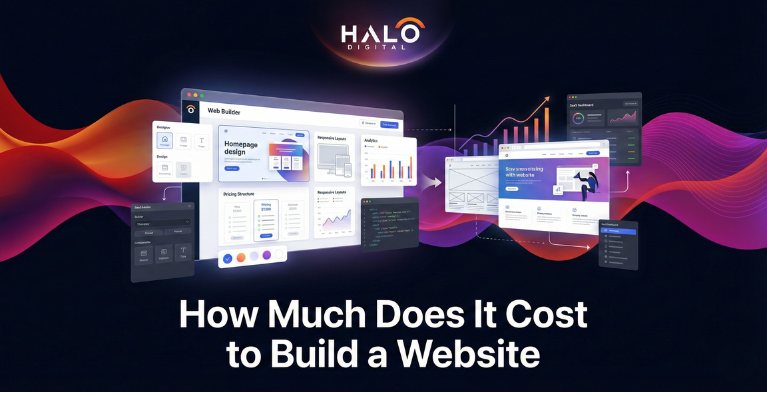
However, having a baseline understanding of market rates is still essential for effective planning. To get a better sense of how complexity and features impact your investment, you can explore our detailed breakdown of web development cost to help align your project requirements with your financial expectations.
The best way to choose a website developer isn’t to hunt for the lowest price, but to find a team whose technical output justifies the investment and prevents long-term technical debt.
Research Agencies With Criteria, Not Just Keywords
With your brief and budget in hand, you’re ready to research the market. The challenge isn’t finding volume; it’s knowing how to pick the best web development firm from a saturated market. This website development company checklist will help you filter for quality over noise.
Focus your shortlisting on:
Technology expertise and stack alignment.
If you need a Laravel-based SaaS application, find agencies with demonstrable Laravel experience. If you’re building on Shopify or WooCommerce, look for agencies with ecommerce-specific portfolios.
While generalists exist, following experienced web developers selection tips means looking for specialists who understand the nuances of your specific tech stack to reduce deployment risk.
Industry experience.
An agency that has delivered projects in your sector understands your users, your compliance requirements, and your competitive landscape. They’ll ask better questions during the discovery phase and make better architectural decisions throughout delivery.
Service breadth.
If you anticipate needing CMS development, cloud infrastructure, and ongoing digital marketing support, look for a partner that can handle all of them. Fragmenting your digital stack across multiple vendors creates coordination overhead that often leads to delays, inconsistency, and misaligned strategy.
Verified client reviews.
Third-party review platforms provide a far more reliable signal than agency-produced testimonials. Look specifically at reviews that address project management quality, communication consistency, and how the agency handled scope changes or unexpected issues.
Website Development Company Checklist for Quick Evaluation:
- Tech Stack Alignment: Do they specialize in your required framework (e.g., Laravel, Shopify, or Custom JS)?
- Communication Flow: Did they respond to your initial inquiry with a personalized touch within 24 hours?
- Scalability Expertise: Can they handle high-traffic infrastructure via Cloud and DevOps?
- Post-Launch Roadmap: Do they offer a dedicated support SLA rather than just “best-effort” maintenance?
At Halo Digital, we have turned complex project requirements into real revenue across 193 plus projects for startups and enterprises worldwide. The right technology and architecture decisions today become your greatest business asset tomorrow.
Evaluate Portfolios Like a Practitioner, Not a Consumer
Most businesses evaluate agency portfolios by looking at how the sites appear visually. That’s understandable, but it misses most of what matters technically.
When reviewing case studies and live project examples, look beyond aesthetics:
Page performance.
Open the live site and test it against Core Web Vitals reporting. A beautiful website that scores poorly on Largest Contentful Paint or Cumulative Layout Shift will be penalised in search rankings and will frustrate mobile users.
Modern performance isn’t just about speed; it’s about architecture. When evaluating an agency’s technical depth, it is worth understanding the latest web development trends, such as headless CMS or server-side rendering, which dictate how well a site handles modern SEO and user experience demands.
Mobile experience.
With the majority of web traffic arriving on smartphones, responsive design is not optional — it’s foundational. Navigate portfolio sites on your phone. If elements are misaligned, text is unreadable without zooming, or interactions feel clunky, that’s a red flag regardless of how polished the desktop version looks.
Structural logic.
Good development leaves a readable, semantic architecture. Assess whether user flows make intuitive sense, whether content hierarchy is clear, and whether the site functions correctly across browsers.
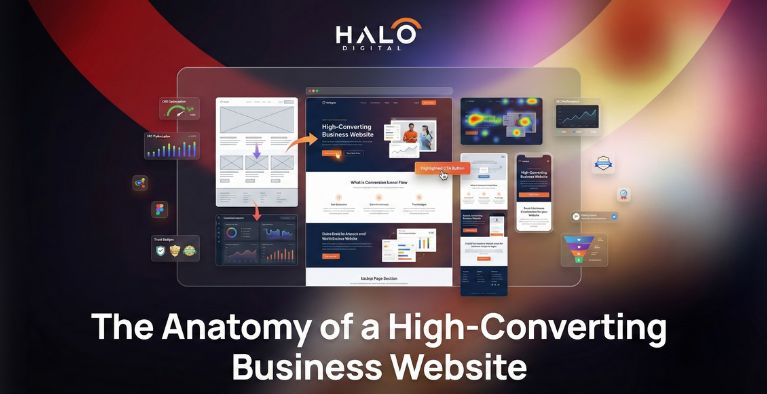
Evaluating these technical elements is easier when you know what a successful structure looks like. Beyond just aesthetics, understanding the anatomy of a high-converting business website allows you to see if a potential partner’s portfolio actually prioritizes the conversion elements your business needs.
Relevance to your brief.
A portfolio full of landing pages tells you very little if you need a complex web application. Ask agencies specifically for examples that most closely match the type of project you’re commissioning.
At Halo Digital, our case studies illustrate the full range of what we build — from DonorSync, a secure SaaS platform for charity donation management with Gift Aid automation, to the Pilgrim app, a multi-feature mobile application that served thousands of users during peak pilgrimage season.
Each case study documents not only what was built but also why specific technical decisions were made and what outcomes the client achieved.
Conduct Interviews That Go Beyond the Sales Conversation
Once you’ve shortlisted two to five agencies, the interview stage is where you separate genuinely capable partners from effective salespeople. The goal is to understand how they think, how they communicate, and how they handle the parts of projects that don’t go to plan.
Here are the essential questions to ask a web development company to gauge their architectural depth:
How do you approach SEO during the development phase?
- ✅ Best Answer: “SEO is baked into our architecture. We start with a technical audit and keyword-mapped sitemap before wireframing to ensure semantic HTML, schema markup, and Core Web Vitals are optimized from day one.”
- ❌ Bad Answer: “We install an SEO plugin at the end and fill out meta tags. If you want deeper optimization, that is a separate marketing package.”
- 💡 The Halo Digital Perspective: Technical SEO is a foundational development requirement, not a marketing add-on. A site must be crawlable and performant the moment it goes live.
Who actually owns the code and assets once the project is finished?
- ✅ Best Answer: “You do. We provide a full intellectual property (IP) transfer upon final payment. You will have full access to the repository, design assets, and all administrative credentials.”
- ❌ Bad Answer: “We host the site on our proprietary system. You have a license to use it, but the core source code remains our property to protect the ‘integrity’ of the build.”
- 💡 The Halo Digital Perspective: Vendor lock-in is a massive business risk. We believe clients should stay with us because of our service quality, not because they are legally tethered to our platform.
How do you ensure the site is mobile-friendly and accessible (WCAG)?
- ✅ Best Answer: “We utilize a ‘Mobile-First’ responsive design approach and test against WCAG 2.1 Level AA standards. Accessibility is a legal and usability baseline for every project we touch.”
- ❌ Bad Answer: “Modern templates handle responsiveness automatically. We can look into specific accessibility needs if your industry requires it.”
- 💡 The Halo Digital Perspective: Inclusive design improves user experience for everyone and protects your business from legal liability. We treat performance and accessibility as non-negotiables.
What CMS or framework would you recommend for my project, and why?
The ‘why’ matters more than the answer. A competent team should articulate the trade-offs between platform choices based on your specific needs.
Walk me through your discovery and scoping process.
Good agencies don’t start building immediately. They invest time in understanding users, mapping requirements, and producing wireframes or technical specifications before a single line of code is written.
How do you handle scope changes during a project?
Every project encounters changes. The question is whether the agency has a structured process for evaluating, pricing, and communicating those changes—or whether it manages them informally.
What does the post-launch support arrangement look like?
Launching a website is not the end of the engagement. Bugs surface, content needs updating, and traffic grows. Understand what’s included in the contract after go-live.
How do you approach SEO and performance during development?
Technical SEO is a development function, not a marketing add-on. Site architecture, page speed, semantic HTML, and Core Web Vitals optimisation happen during build.
How do you ensure ADA and WCAG accessibility compliance?
Digital accessibility is both a legal obligation in many regions and a signal of development quality.
Pay close attention to how candidates answer, not just what they say. Agencies that are genuinely good at what they do tend to be specific, direct, and comfortable acknowledging what they don’t know.
Learning how to compare web development companies requires looking at the gaps in their process just as much as their successes.
Know the Red Flags Before You Sign Anything
The evaluation process is also a process of elimination. As you conduct interviews and review proposals, watch for patterns that suggest a partnership will be difficult:
- No verifiable portfolio or client references. An agency unwilling to connect you with past clients has something to hide.
- Reluctance to commit to timelines or pricing. Estimates should be grounded in scope, not delivered as moving targets.
- Unclear ownership and handover terms. Confirm before signing that you will own all code, design assets, and intellectual property produced.
- Poor communication during the sales process. Three-day response windows before you’ve even signed are a preview of your client experience after.
- Promises without supporting evidence. First-page rankings and guaranteed conversion lifts without substantiating case studies are not commitments — they’re marketing.
Learning how to compare web development companies effectively means looking for transparency. If an agency cannot explain the “Why” behind their technical recommendations, they are likely following a template rather than a business strategy.
Compare Proposals on Substance, Not Just Price
When comparing website development services selection options, look for substance in the scope of work rather than just the bottom-line figure.
A significantly cheaper proposal often reflects an incomplete scope, a more junior team, or assumptions about your requirements that won’t survive first contact with the actual project.
Compare proposals on scope clarity—do they precisely define what’s included and excluded?
Regarding the milestone structure, are there clear delivery phases with defined deliverables? On the technical approach, does the agency explain why they’re recommending specific technologies?
On team transparency — who will actually be working on your project? And on post-launch terms — what happens if critical bugs surface after go-live?
A vague scope is where unexpected costs originate. Clear, detailed proposals are a strong indicator that an agency has thought carefully about your requirements rather than applying a template.
Review the Contract With Appropriate Rigour
The service agreement you sign governs your relationship when something goes wrong. Read it carefully — and if you’re uncertain about specific clauses, take legal advice before signing.
Clauses worth scrutinising include: payment structure and milestone triggers; deliverable definitions that clarify what constitutes completion at each stage; an intellectual property assignment confirming you own everything produced; termination terms explaining what happens if you need to exit before project completion; and dispute resolution processes.
A reputable web development company will have standard contract terms that are clearly written and reasonable. Contracts that are deliberately opaque or place all risk onto the client are a signal about how the agency operates day to day.
The Right Partner Makes the Work Easier
Selecting a web development company is ultimately about finding a team you can trust with something important — the digital representation of your business. That trust is built through consistent evidence: a strong portfolio, transparent communication, specific and substantiated answers to technical questions, fair contractual terms, and a track record of delivering results for clients in similar situations.
At Halo Digital, co-founded by Arsalan Chaudhary and Noman Akhter, our approach begins before the first line of code is written. Discovery, user flow mapping, technical scoping, and design iteration happen first — because the decisions made in that phase determine the quality of everything that follows.
Across mobile app development, custom software, ecommerce solutions, CMS builds, cloud and DevOps, and digital marketing, we work with businesses that want a partner invested in outcomes, not just outputs.
If you’re at the beginning of your agency search, start with your brief. Then let the brief lead you.
Frequently Asked Questions
1. How do I choose the right web development agency for my business?
Focus on technical alignment, industry experience, and transparency. A professional agency should offer a clear discovery process, demonstrable expertise in your specific tech stack (like Laravel or Shopify), and verifiable client success stories that prove long-term ROI.
2. What are the key things to consider before hiring web developers?
Before hiring, define your primary business goals, scalability needs, and budget. Ensure the team prioritizes “Performance-Driven Engineering,” including technical SEO, mobile responsiveness, and Core Web Vitals, rather than just focusing on visual aesthetics or pre-made templates.
3. How can I evaluate a web development agency’s technical expertise?
Review their portfolio like a practitioner, not a consumer. Test their live projects for page speed, structural logic, and mobile usability. Ask specific questions about their approach to code ownership, security protocols, and integration with third-party systems like CRMs.
4. Why is a discovery process important in web development selection?
A robust discovery phase ensures your project is built on strategy, not guesswork. It involves stakeholder interviews and technical scoping to prevent scope creep, ensuring the final platform aligns perfectly with your user journeys and long-term business growth.
5. How do I compare web development companies beyond the initial price?
Compare proposals based on scope clarity, milestone structures, and post-launch support. A lower price often indicates technical debt or hidden costs. Look for partners who guarantee full intellectual property ownership and offer dedicated support SLAs for post-go-live stability.
6. What are the common red flags when hiring web developers?
Watch for vague pricing estimates, lack of verifiable client references, or reluctance to provide full source code ownership. A major red flag is poor communication during the sales phase, which usually predicts significant project management issues during development.
7. Should I choose a niche specialist or a full-service digital agency?
Choose based on your growth needs. While niche specialists offer deep technical focus, a full-service agency like Halo Digital ensures your website integrates seamlessly with SEO, digital marketing, and cloud infrastructure, preventing technical silos that hinder long-term scalability.
8. How long does the web development company selection process take?
A thorough selection process typically takes 2 to 4 weeks. This includes internal briefing, shortlisting 3–5 agencies, conducting technical interviews, and reviewing detailed proposals to ensure the partner’s discovery process aligns with your specific business logic.

Abdullah Mangi is an SEO strategist and content writer with 5 years of experience helping businesses grow online. He writes about programming, tech, online business, and practical how-to topics. Abdullah has worked with clients in SaaS, software development, web design, link building, yacht rentals, gardening, car rentals, and recruitment.