




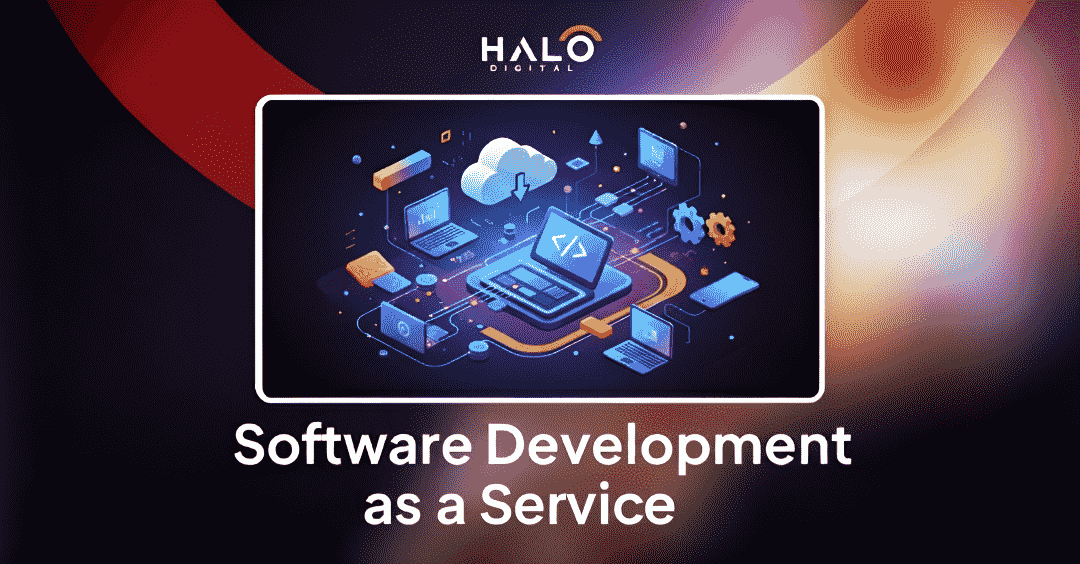
- Software Development as a Service (SDaaS) is a subscription-based model that gives businesses on-demand access to full-cycle software development with predictable monthly costs, clear SLAs, and scalable resources.
- Unlike traditional IT outsourcing or staff augmentation, SDaaS works as a strategic partnership, combining Agile methodology, DevOps, and CI/CD pipelines to deliver faster, higher-quality software.
- SDaaS enables companies to quickly build SaaS products, MVPs, and innovation projects using full-stack development teams, cloud platforms like AWS, Azure, and Google Cloud, and modern architectures.
- By leveraging global talent pools, Generative AI, low-code/no-code tools, and cloud-native microservices, SDaaS helps businesses overcome the global developer shortage and accelerate digital transformation in 2025.
- Startups, SMBs, and enterprises benefit from SDaaS through faster time-to-market, reduced risk, built-in QA and security, and the freedom to focus on core business growth instead of managing development teams.
Software development services are changing the way businesses create digital products. Instead of bringing in-house developers on staff or using traditional outsourcing, businesses are adopting flexible models based on services.
According to a report, the global IT outsourcing spending is expected to surpass $800 billion by 2029. This is a sign of the confidence businesses put in models that are scalable, such as SDaaS. From my experience, companies who adopt this model benefit from faster delivery, more predictable costs, and greater control over the quality of their services.
What Is Software Development as a Service?
Software Development as a Service (SDaaS) is a subscription-based model that allows companies to access complete development services on demand, offering predictable monthly costs instead of one-off project expenses.
Instead of managing recruiting infrastructure, overhead, and other costs businesses can depend on a specialist service provider for help to develop software as a service.
The strategy covers everything: designing, discovery testing, deployment and even support. As someone working with companies that are established and startups, SDaaS stands out because it’s not only focused on providing developers with a platform.
It provides a scalable, quality-driven approach to building Software as a Service (SaaS) products and other digital solutions.
When adopting SDaaS businesses can concentrate more on growth and strategy and leave the technical implementation to experts who adhere to proven workflows.
Key Features of the SDaaS Model
The SDaaS model is characterized by a variety of characteristics that differentiate the custom software development as a service from traditional outsourcing. Companies no longer “rent developers.” They get structured services designed to maximize long-term benefit.
- Full-cycle coverage: From ideation to deployment and post-launch assistance.
- Predictable pricing: Clear cost structures that let businesses to create budgets.
- Access to expert knowledge: Teams with a variety of expertise in domains and technical aspects.
- Scalable engagement: Ability to modify the resources to meet project demands.
- Tech-driven delivery: Using Agile DevOps, DevOps, and cloud-native tools to increase the efficiency.
For companies exploring modern workflows, our guide on DevOps adoption explains how these practices improve delivery speed and reliability.
SDaaS vs Traditional Outsourcing & In-House Development
Many companies struggle with the choice between in-house development outsourcing, outsourcing and SDaaS. Each option has its advantages and disadvantages. This advantage of a hybrid model is the reason more businesses are moving to the SDaaS model by 2025.
- In-house development provides a strong degree of control and a culture of alignment. However, it comes with high costs and long hiring cycles and a difficult scaling up.
- Traditional outsourcing can reduce the pressure on hiring however, it is often not transparent as well as predictable pricing as well as seamless alignment with the business goals.
- SDaaS blends the best of both worlds by offering scalability and elasticity in resource allocation, while positioning the provider as a strategic long-term partnership rather than a short-term vendor. Based on my experience, companies that adopt SDaaS typically grow faster and see higher ROI than the other two options.
A similar balance of cost and performance can be seen when comparing desktop vs web applications, where the right model depends heavily on business goals.
How the SDaaS Model Works
Every SDaaS model is characterized by a process model for engagement, workflow as well as a tool stack. I’ll highlight these three areas in the following paragraphs.
Engagement Models (Dedicated Team, Project-based, Hybrid)
I’ve seen startups thrive by engaging in projects, whereas companies prefer dedicated teams for continuity. Hybrid models are great for scaling up and adapting to the changing needs.
SDaaS partners offer flexible engagement models governed by a clear Service Level Agreement (SLA), defining deliverables, timelines, performance benchmarks, and quality standards.
- Dedicated Team: A full-time team working exclusively on your product. Best for long-term projects.
- Project-Based: Suitable for clearly defined areas such as MVPs or single-time solutions.
- Hybrid: Combining both to provide the flexibility of the system and efficiency in its cost.
Typical Workflow: From Discovery to Deployment
A well-planned workflow will ensure the smoothest delivery. In my opinion it makes SDaaS much more secure than ad hoc outsourcing. A typical SDaaS workflow can include:
- Discovery: Understanding the goals, challenges, and requirements.
- Planning: During planning, a Solution Architect designs the system architecture, timelines, and optimal resource allocation. For businesses adopting SDaaS, this often includes refining their web application architecture to ensure solutions are scalable, modular, and aligned with long-term growth goals.
- Development: Coding, integrating and iterating through Agile sprints.
- Testing: For QA, bug fixing and security tests.
- Deployment: Launching the product in the desired environment.
- Support: Continuous monitoring and regular updates.
Role of Technology and Tools in Enabling SDaaS
Utilizing the most advanced and efficient software, SDaaS providers ensure projects can be completed in a short time while maintaining the quality and transparency. Technology is the foundation of SDaaS. The key enablers are:
- SDaaS providers leverage Infrastructure as a Service (IaaS) and Platform as a Service (PaaS) offerings from cloud platforms like AWS, Microsoft Azure, and Google Cloud to ensure scalability.
- DevOps engineers use tools like Jira, GitHub, and Jenkins to maintain deployment pipelines and delivery stability.
- Collaboration tools such as Slack or Zoom to help bridge communication gaps.
- Automated CI/CD pipelines support continuous integration and continuous deployment, ensuring reliable releases, faster updates, and reduced deployment risks.
We combine software development, creative design, and digital marketing under one roof, giving your business a trusted partner for both technology and growth.”
Benefits of Software Development as a Service
Companies have a variety of benefits from software development as a service and especially when they work with experts in software development, such as HALO Digital.
I’ll focus on the best advantages your company can reap through SDaaS.
Cost Optimization and Predictable Pricing
Traditional hiring typically is accompanied by hidden costs: wages, benefits infrastructure, training and salaries. SDaaS reduces these expenses by offering unambiguous subscriptions or a use-based cost.
Companies know ahead of time the amount they’ll spend. From my experiences, certainty is among the main reasons why companies opt for develop software as a service.
On-Demand Access to Skilled Specialists
The process of hiring niche experts like AI experts or Blockchain developers may take months. With SDaaS businesses have instant access to experts in these fields.
SDaaS providers work with full-stack development teams that include designers, backend and frontend engineers, QA specialists, and technical architects, eliminating recruitment delays
. This flexibility allows businesses to get their jobs done quickly in competitive sectors.
Faster Time-to-Market
SDaaS teams rely on Agile methodologies such as Scrum and Kanban, enabling iterative development cycles, continuous feedback, and faster delivery.
Instead of wasting months on recruiting and setting up companies can begin development in just a few weeks.
This makes SDaaS a game changer for startups aiming to quickly launch a Minimum Viable Product (MVP) and validate ideas in the market.
Scalability and Resource Flexibility
One of the most significant benefits for the custom software development as a service is the ability to scale. Businesses can increase the size of their teams or down according to the phases of the project.
For instance, increasing resources during development, and then reducing them after launch. This allows for both under-utilization and excessive spending.
Risk Reduction and Quality Assurance
SDaaS providers adhere to industry standard and high-quality frameworks.
Integrated Quality Assurance (QA) and test automation throughout the SDaaS lifecycle reduce bugs, security vulnerabilities, and downtime risks.
As opposed to traditional outsourcing which often overlooks quality control, SDaaS makes risk management an essential aspect.
Focus on Core Business Priorities
When businesses attempt to handle development within their own facilities, they tend to become distracted from their primary objectives. SDaaS eliminates this burden. Leaders can focus on sales strategy, strategy, or customer service and the service provider will ensure the smooth execution of technical processes.
I’ve witnessed businesses grow faster by shifting their focus away from coding and instead expanding operations.
Potential Challenges of SDaaS
Although SDaaS offers a number of advantages, there are some problems that you may face when the proper steps aren’t followed.
Communication and Collaboration Barriers
The work of teams that are distributed may occasionally lead to communication issues. The different time zones, culture or ambiguous expectations could hinder the pace of progress.
The most efficient SDaaS companies use collaboration tools and frequent check-ins in order to overcome this issue. Based on my experience, projects can be successful when communication is transparent and consistent.
Data Security and Compliance Concerns
Data security remains a top-of-mind concern for any business.
Since the SDaaS model involves giving a partner access to private information, it naturally raises flags about GDPR and HIPAA compliance.
To bridge this trust gap, top-tier providers lean on strong cybersecurity frameworks and rigorous data governance practices.
By baking in regular compliance audits, these providers protect sensitive data while offering the long-term security and peace of mind that modern enterprises demand.
Vendor Dependency and Contract Risks
A long-term association with a single vendor may result in dependence. If the vendor performs poorly or adjusts their pricing, a switch could be difficult. A clear contract as well as exit strategies and IP ownership clauses are helpful in avoiding these issues.
Ensuring Consistent Quality Standards
Not all SDaaS service providers offer the same quality. If they don’t have proper monitoring, companies could be faced with issues related to issues with bugs or slow scaling. Determining milestones, KPIs, and quality benchmarks in advance will ensure that both sides are aligned.
When to Consider Adopting SDaaS?
Service Desk as a Service (SDaaS) can be a smart move when your organization wants to modernize IT support, improve user experience, and reduce overhead. You might consider adopting SDaaS in the following situations:
For Startups and Scaleups
Startups are often not able to afford the capital or time to set up teams in-house. SDaaS provides them with instant access to the best talent, predictable costing, and also the capability to create MVPs quickly. Scaleups also gain from expanding features, without slowing growth.
For Small and Medium Businesses (SMBs)
Small and medium-sized businesses face a lack of resources, but they require top-quality software to remain competitive. SDaaS aids them developing a software as a service application or internal tools without spending too much. In my opinion, SMBs gain the most value from avoiding the cost that permanent team members incur.
For Large Enterprises Seeking Agility
Enterprises often have a problem with slow processes. SDaaS allows them to be more agile that allows them to test innovative products or modernize existing systems. With the ability to scale resources and tested workflows, they can create new products without disrupting the existing processes.
Specific Project Scenarios (Innovation, MVPs, Legacy Modernization)
I’ve seen companies adopt SDaaS especially for labs that are innovating, and where speed and flexibility are the most important factors.
SDaaS works best for:
- Innovation projects often include integrating Generative AI and Large Language Models (LLMs), along with blockchain and IoT technologies.
- MVPs: Quickly testing ideas in the market.
- Legacy modernization: Updating old systems with new technologies.
How to Choose the Right SDaaS Partner
It all will depend on your SDaaS company you select. If they aren’t staffed by experts or sufficient market knowledge Your SDaaS may not be the most effective among your competitors.
This is where agencies for development such as HALO Digital come in, who provide top-quality services to their customers for years.
These are the factors you should consider before deciding on the right SDaaS partner.
Defining Business Goals and Technical Requirements
Before deciding on a service company, you must define your goals. Are you creating an MVP or scaling an SaaS service, or updating existing software? Determining your technical and business needs will ensure you choose an expert who will provide.
Evaluating Technical Expertise and Domain Experience
A reliable SDaaS provider will have expertise in the field you require. Verify if they’ve been involved in similar projects and if they have the ability to develop software as a service with the required stack. Expertise in a specific area helps reduce time and the risk.
Checking Case Studies, Reviews, and Client References
Testimonials and case studies reveal how the firm has managed the past projects. The reading of independent reviews can give an accurate picture. In my own research I’ve noticed that strong reviews often indicate a solid long-term partnership.
Assessing Communication, Transparency, and Cultural Fit
The most effective partnerships extend beyond the technical capabilities. Communication is clear, frequent updates and a common culture help to make collaboration easier. Try this during the first interactions to prevent future conflicts.
Avoiding Red Flags (Overpromises, Hidden Costs, Lack of Clarity)
Be wary of any company that promises unrealistic timelines, conceals pricing information, or refuses to provide straight responses. These are red flags that could result in disappointment later. A honest partner is always superior to one who promises too much.
Best Practices to Maximize the value of SDaaS
I would suggest following the steps below to maximize the benefits of SDaaS.
Setting Clear KPIs and Milestones
Determine success metrics early. It doesn’t matter if it’s delivery times or user acceptance, and system performance, the measurable KPIs aid in tracking the progress. Milestones help assure accountability throughout the entire project.
Using Agile and DevOps Approaches
Agile and DevOps make projects more flexible and productive. Agile assures continuous iteration, while DevOps assures smooth deployment. Together, they can reduce the time to market and increase the quality of products.
Maintaining Continuous Communication
A dedicated Product Owner or Project Manager ensures alignment through regular stand-ups, progress reviews, and feedback sessions.
My experience has shown that projects that emphasize communication experience have less setbacks and produce more outcomes.
Investing in Security and IP Protection
Data breaches can damage trust. Security-ensuring code, regular audits and explicit IP owner agreements are vital. Always make sure your SDaaS provider adheres to global compliance standards.
Building a Long-Term Partnership Mindset
SDaaS is best viewed as a partnership, and not only as a transaction. Through building relationships over time, companies benefit from a deeper understanding, greater collaboration and more solid support.
Future of Software Development as a Service
Software Development as A Service is an option with an excellent future. A growing number of businesses and startups are choosing it, and the amount is expected to increase further in the near future.
AI and Automation in SDaaS Delivery
AI-driven code tools, automated testing along with predictive analytics are expected to help make SDaaS quicker and more robust. Service providers already utilize AI to improve workflows and identify issues earlier.
Growing Adoption of Cloud-Native and Microservices
Microservices and cloud-native architectures will be the dominant feature of SDaaS. They will make apps more flexible, resilient and simpler to manage. Software as a service will appreciate this particular feature.
For businesses weighing different hosting and scaling options, our comparison of cloud vs web applications offers additional perspective.
Increasing Role of Remote-First Global Talent Pools
Remote-first models let companies recruit talent from any location. Businesses can gain access to the top specialists without having to be restricted by location.
Predictions for SDaaS Market Growth
Rapid digital transformation initiatives and the global talent shortage are key drivers behind the growing adoption of SDaaS in 2026.
As the digital revolution accelerates companies will shift out of rigid hire systems and towards service-based software development.
Power Your Growth with Software Development as a Service by Halo Digital
As digital products become more complex and competition accelerates, relying on fragmented teams or traditional outsourcing is no longer enough. Halo Digital’s Software Development as a Service SDaaS offers a smarter and scalable alternative designed for businesses that demand speed, quality, and long term value.
We act as a strategic SDaaS partner, not just a development vendor. From discovery and UX UI design to scalable software development, cloud and DevOps, and ongoing optimization, we deliver end to end digital solutions tailored to your business goals. Our flexible engagement models allow you to scale resources on demand while maintaining predictable costs and consistent quality.
A Full Service SDaaS Partner Under One Roof
What sets Halo Digital apart is our ability to combine technical excellence, creative strategy, and business growth within a single integrated team.
We deliver full service Software Development as a Service across custom software development, web and mobile app development, CMS solutions, eCommerce platforms, cloud and DevOps, digital marketing, and brand identity and design.
This unified approach allows us to manage the entire digital lifecycle seamlessly from initial concept to long term scale.
Proven Results Across Industries
Our case studies demonstrate real measurable impact across multiple industries.
From building secure and scalable SaaS platforms such as DonorSync to developing high performance mobile applications like Pilgrim, along with enterprise grade CMS solutions and conversion focused eCommerce experiences, our work reflects reliability, scalability, and quality.
By following Agile and DevOps best practices, prioritizing quality assurance and security, and maintaining transparent communication, we ensure consistent delivery and long term performance.
Built for Growth and Scale
Whether you are launching a SaaS product, modernizing legacy systems, scaling an eCommerce platform, or building a high impact web or mobile application, Halo Digital’s SDaaS model gives you the flexibility and expertise to move faster with confidence.
Every solution we deliver is aligned with measurable business outcomes including growth, performance, user experience, and return on investment.
Start Your Digital Growth Journey with Halo Digital
Explore our case studies or schedule a consultation to discover how Halo Digital can support your next phase of digital growth as your long term partner for scalable software, design, and innovation.
Conclusion
The software development Service offers flexibility, scalability and predictable pricing, while assisting companies remain in the game. It minimizes risk, speeds delivery, and gives access to the best talent. Businesses who adopt SDaaS by 2025 are better equipped for growth and innovation.
FAQs
What is SaaS software?
SaaS software is a cloud based application delivered over the internet through a subscription, with no need for local installation or manual updates.
What is the difference between software development services and SaaS?
Software development services build customized solutions for a single business, while SaaS offers a ready made product used by many customers online.
What is software as a service and examples?
Software as a Service is software hosted in the cloud and accessed online, with examples like Google Workspace, Salesforce, Zoom, Shopify, and Slack.
Is ChatGPT a SaaS?
Yes, ChatGPT is a SaaS product because it is accessed online, subscription based, and fully managed by the provider.
Is Netflix a SaaS or PaaS?
Netflix is a SaaS platform because users access its service online without managing any underlying infrastructure.
Is SaaS outdated?
SaaS is not outdated and continues to grow due to its scalability, cost efficiency, cloud adoption, and AI driven innovation.

Arsalan Chauhdary is the CEO and Co-Founder of Halo Digital, a full-spectrum software development agency serving startups and enterprises globally. Over the past 10 years, he has led the architecture and development of platforms used by millions of people across 160+ countries, including DonorSync (GDPR-compliant charity SaaS), Pilgrim (faith-based mobile app with 50K+ users), and enterprise portals for multinational organizations. His work has been referenced by Cloudways and published on Creately. Arsalan Tariq specializes in Laravel, AWS, and building secure, scalable systems for regulated industries including healthcare, finance, and nonprofits. At Halo Digital, he leads a multidisciplinary team focused on delivering products that prioritize security, compliance, and long-term impact.